
What are innovative learning spaces
An innovative learning space is planned around what students do, not around where the teacher stands. It lets students move easily between working alone, in groups and presenting to everyone, and it adds tools that expand what can be learned in it.
Four stages in the evolution of the learning space
The evolution can be seen as four stages. A school does not have to choose one: they can live side by side.
Traditional classroom
Rows of desks, teacher at the board
Flexible space
Mobile furniture and group zones
Innovation lab
Tools for building, making and inquiry
Virtual space
A 3D world the whole class enters
The virtual space: the next stage
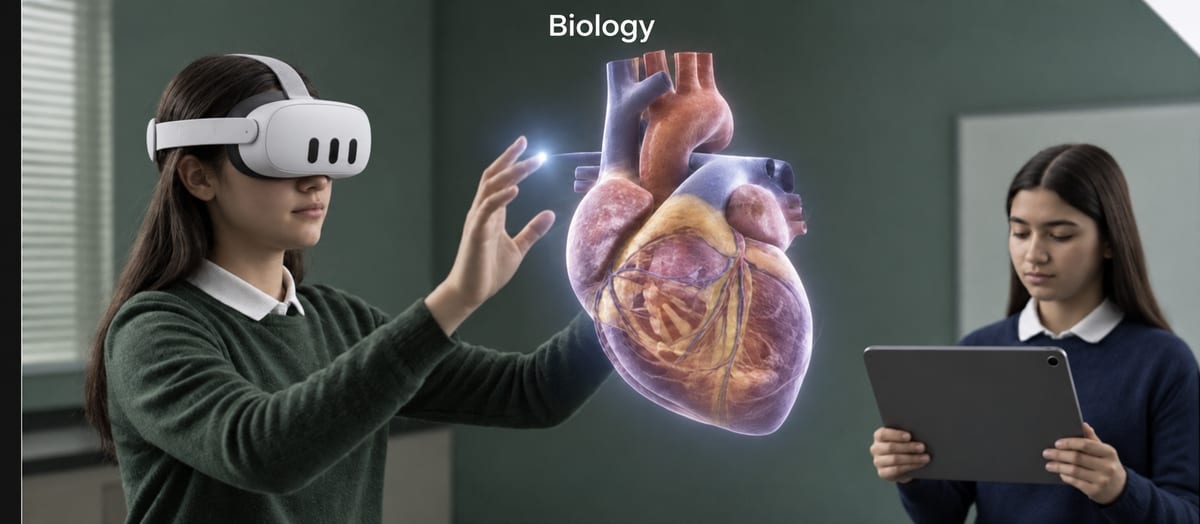
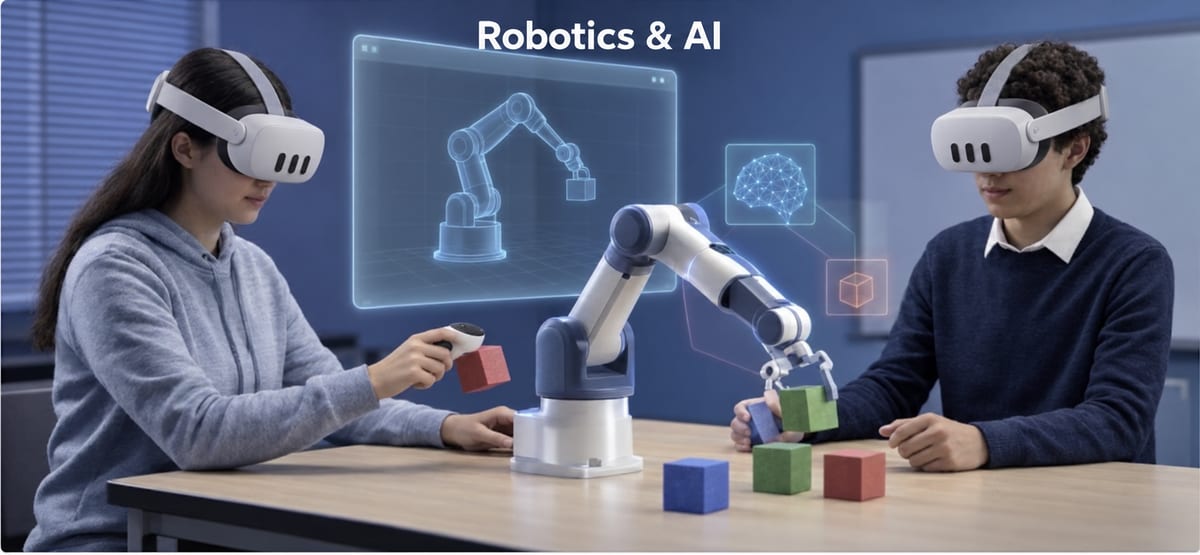
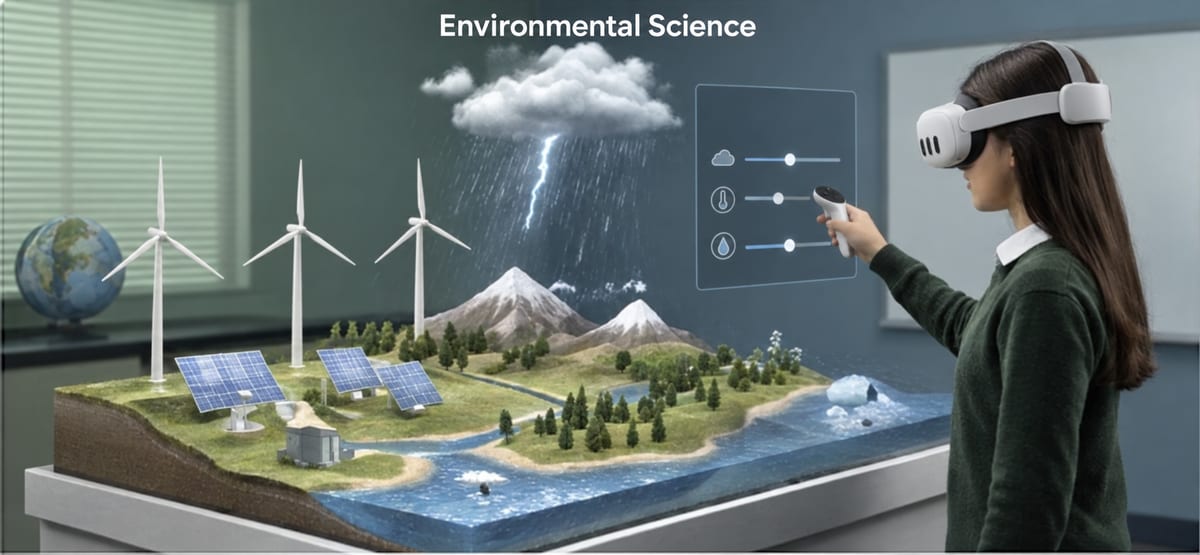
A virtual space adds something no physical room can: access to places and scales the school does not have. The inside of a cell, a whole ecosystem, or a lab with materials that may not be brought into class. In virtual reality headsets the whole class enters the same space together, and every student acts in it.
With Quest 3 and 3S you can also bring the experiment back into the room: in mixed reality it sits on a real classroom table.

How to combine them in a school
- Start with one flexible space and define zones in it.
- Add a tool that expands learning, such as VR headsets with learning content.
- Train teachers to teach in the new space.
- Measure what works and expand. More: VR classroom & innovation lab.