
Augmented reality labs for students: science and STEM inside the real classroom
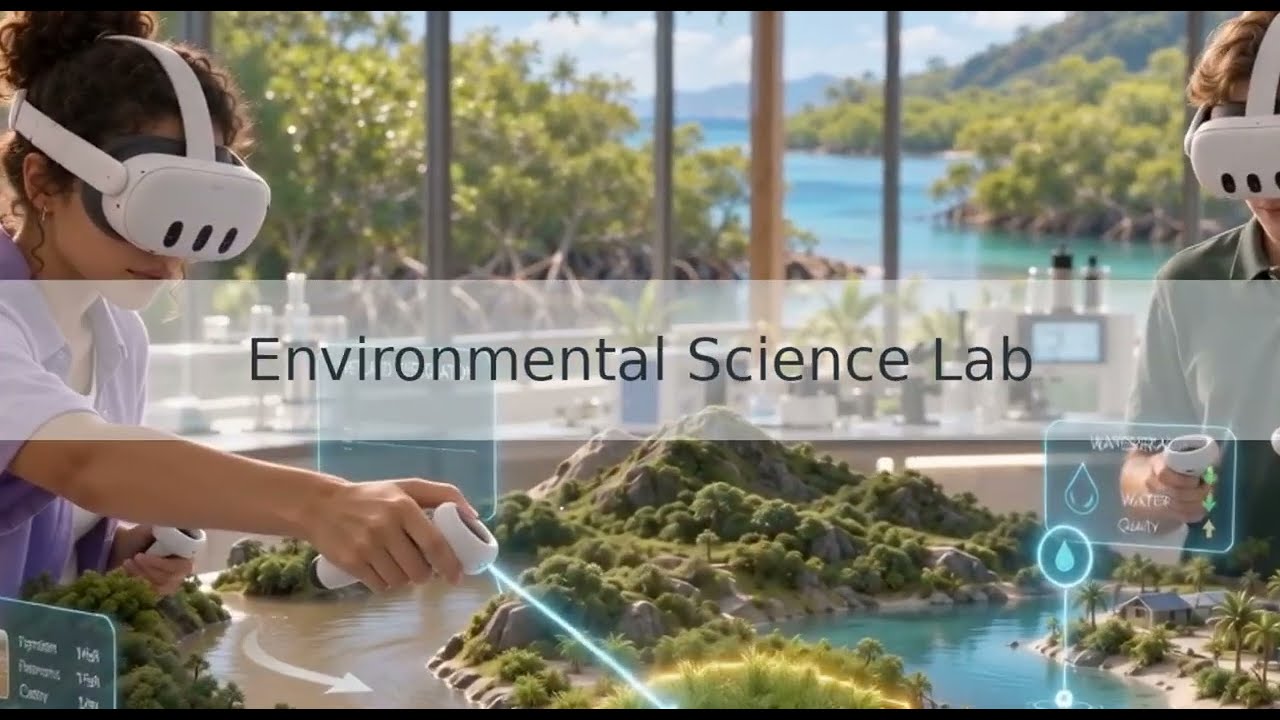
With Meta Quest 3 and 3S headsets, students can see the real classroom while the virtual experiment appears inside it, on a real table. proLabsXR combines virtual reality (VR) and mixed reality (MR), and students switch between them from the experiment menu.
Virtual, augmented and mixed reality: what is the difference
In virtual reality (VR) the student is fully inside a virtual world. In augmented reality (AR) virtual objects are added to the real world. Mixed reality (MR) brings the two together: virtual objects sit in the real space, and you can walk around them and work with them by hand. Together they are called XR, hence the name proLabsXR.
When each one fits the lesson
Virtual reality (VR)
Full immersion in the lab world: when you want full focus, a setting no classroom has, or a scale you cannot see, like inside the cell.
Augmented reality (AR)
A virtual layer over the real world: 3D objects and explanations that appear in the space around the student.
Mixed reality (MR)
The experiment sits on a real table. Students see each other and the teacher, and work together around the same experiment.
Move the experiment onto the real table
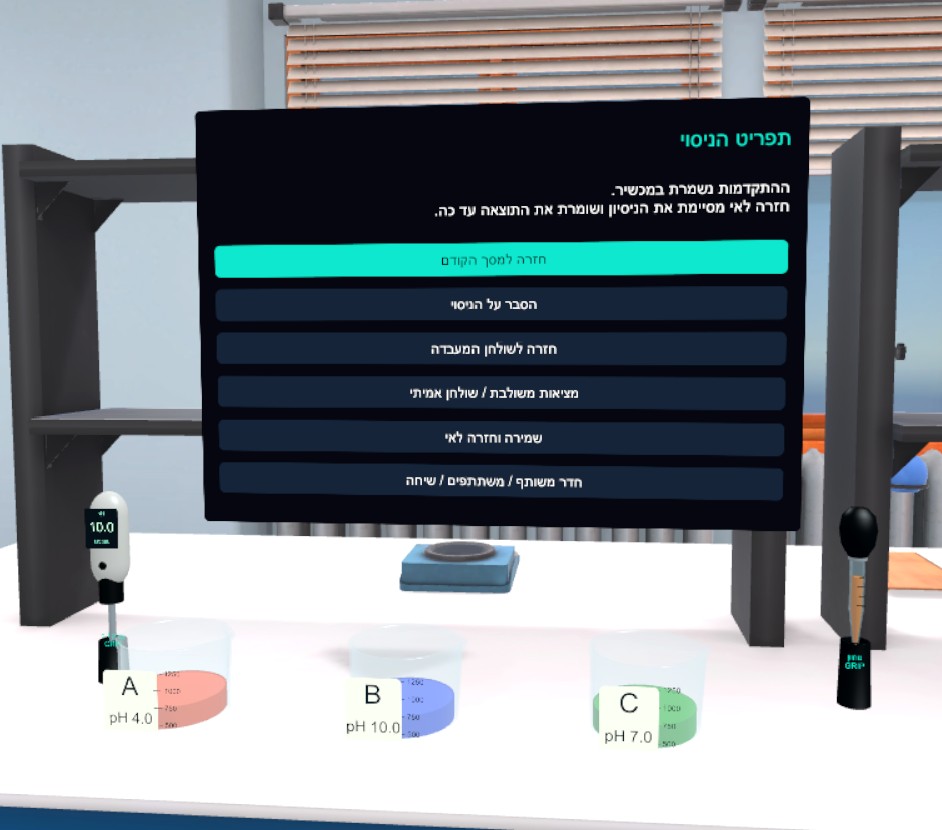
The experiment menu has a "Mixed reality / real table" option. The student picks it, and the experiment moves from the virtual lab onto the table in front of them in class. Progress is saved, and they can go back to the lab at any moment.
- See the classroom, classmates and the teacher
- The experiment sits on a real table
- Switch between VR and mixed reality from the experiment menu
- Progress is saved all along
What you gain when the experiment is in the classroom
Face-to-face teamwork
Students see each other and talk as usual, around the same experiment.
Aware of the room
They see the real room, so it is easier to find their way and move safely.
The invisible, on the table
A cell, the structure of matter or the current in a circuit, at a scale you can walk around and examine.
The lesson stays a lesson
The teacher sees the students, and they see the teacher and hear the instructions.
Content and lessons for a science lab in augmented reality headsets
The proLabsXR science labs — physics, chemistry, biology, electronics and engineering, environmental science and robotics — are built as inquiry lessons: question, hypothesis, measurement and conclusion. Every experiment has a card in the teacher portal and a student sheet, so it fits easily into the lesson plan. See all the labs.
STEM learning in augmented reality headsets
STEM — science, technology, engineering and math — suits augmented and mixed reality especially well: build an electric circuit, examine a solid from every side, or run a robot, next to your classmates. About STEM in proLabsXR.
What you need
For mixed reality: Meta Quest 3 or Quest 3S headsets, whose cameras show the room in color. On Quest 2 the labs run in virtual reality. No external computer is needed. Already have headsets? Here is how to add content to them. Licenses are bought directly from ProMixed.
Frequently asked questions about augmented reality labs
What is the difference between virtual and augmented reality?
In virtual reality (VR) you see only a virtual world. In augmented reality (AR) you see the real world, with virtual objects added to it. Mixed reality (MR) brings them together, so virtual objects sit in the real space and you can work with them.
Is proLabsXR an augmented reality lab?
proLabsXR is an XR product that combines virtual reality and mixed reality. With Quest 3 and 3S headsets, you can move an experiment onto a real table in class, from the experiment menu.
Which headsets support mixed reality?
Meta Quest 3 and Quest 3S. On Quest 2 the labs run in virtual reality.
Which subjects can be taught this way?
Physics, chemistry, biology, electronics and engineering, environmental science, robotics and AI, and math experiments too.
Which ages is it for?
Primary, middle and high school. It is also worth checking the headset maker's age guidelines.
Which languages?
Hebrew, Arabic, English and more.
More ways to bring proLabsXR to your school
Virtual labs
Six science labs in VR headsets, for every grade level.
Read more →STEM education
Science, technology, engineering and math, inside the headset.
Read more →VR classroom & innovation lab
How to set up a virtual reality classroom in your school.
Read more →Content for Meta Quest
Have headsets? Here is the educational content they are missing.
Read more →Want to see an experiment on a real table?
Book a live demo with the ProMixed team, at your school or on a video call
Book a live demo